
Watch the video without reading the text first. Two classmates are talking on Friday afternoon about their weekend plans. Try to understand what is happening and what they are saying.
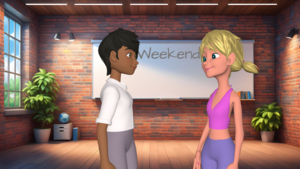
Don't forget to like the video and subscribe to the channel.
Watch the video again while reading the text. Check whether you understand more and pay attention to how the words are pronounced.
A: Wat ga je dit weekend doen?
B: Ik ga naar mijn ouders in Breda. En jij?
A: Ik blijf in de stad. Ik ga zaterdag naar de markt.
B: Gezellig! Ga je met iemand?
A: Ja, met een vriendin. We gaan groenten en kaas kopen.
B: Lekker. En zondag?
A: Dan ga ik uitslapen en misschien een film kijken.
B: Ik ook. Ik wil eindelijk die nieuwe serie zien.
A: Leuk! En ga je nog studeren?
B: Ja, helaas wel. We hebben maandag een toets.
A: O ja, bijna vergeten! Dan ga ik ook studeren zondagavond.
B: Goed idee. Maar eerst: weekend!
A: Precies. Fijn weekend alvast!
B: Jij ook!
Read the English translation. Make sure you understand the Dutch conversation.
A: What are you going to do this weekend?
B: I’m going to my parents in Breda. And you?
A: I’m staying in the city. I’m going to the market on Saturday.
B: Nice! Are you going with someone?
A: Yes, with a friend. We’re going to buy vegetables and cheese.
B: Tasty. And Sunday?
A: Then I’m going to sleep in and maybe watch a film.
B: Me too. I finally want to watch that new series.
A: Nice! And are you going to study too?
B: Yes, unfortunately. We have a test on Monday.
A: Oh yes, I almost forgot! Then I’m going to study on Sunday evening too.
B: Good idea. But first: weekend!
A: Exactly. Have a nice weekend in advance!
B: You too!
Listen to the conversation and repeat each sentence.
Dutch | English |
blijven | to stay / to remain |
iemand | someone |
de groente (-s/-n) | vegetables |
uitslapen | to sleep in |
de serie (-s) | series |
helaas | unfortunately |
de toets (-en) | test |
vergeten | to forget |
eerst | first |
precies | exactly |
The near future with gaan
In Dutch, the near future is often expressed with gaan + infinitive (similar to English “going to”). It shows that someone plans to do something or that something will probably happen soon.
Conjugated “gaan” + infinitive
Subject | gaan | Example |
ik | ga | Ik ga werken. – I’m going to work. |
jij / u | gaat | Je gaat studeren. – You’re going to study. |
hij / zij | gaat | Hij gaat slapen. – He’s going to sleep. |
wij | gaan | Wij gaan eten. – We’re going to eat. |
jullie | gaan | Jullie gaan reizen. – You’re going to travel. |
zij | gaan | Zij gaan wandelen. – They’re going to walk. |
Important
Change the sentences into the gaan-future.
Dutch | English |
de hobby (-s) | hobby |
muziek luisteren | to listen to music |
wandelen | to go for a walk |
tekenen | to draw |
spelletjes spelen | to play games |
met vrienden afspreken | to meet up with friends |
naar de bioscoop gaan | to go to the cinema |
If you have other hobbies or free-time activities, look them up in Dutch.
Useful sentences
Denk na over je eigen vrijetijdsbesteding en vertel in minimaal 3 zinnen in het Nederlands wat je gewoonlijk doet en wat je leuk vindt. - Think about your own free-time activities. Say at least three sentences in Dutch about what you usually do and what you like.
Doing exercises is an essential part of the learning process. Don't worry about how many mistakes you make—mistakes are a normal and valuable part of learning.
When checking your answers, focus on understanding why an answer is correct. This will help you learn more effectively and avoid making the same mistakes in the future.
1c, 2d, 3e, 4a, 5a
1c, 2d, 3a, 4b, 5e