
Watch the video without reading the text first. Two students are getting to know each other better and talking about what they do in their free time. Try to understand what is happening and what they are saying.
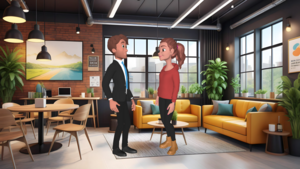
Don't forget to like the video and subscribe to the channel.
Watch the video again while reading the text. Check whether you understand more and pay attention to how the words are pronounced.
A: Wat doe jij graag in je vrije tijd?
B: Ik lees graag boeken. Vooral romans.
A: Leuk! Ik hou ook van lezen, maar ik lees liever strips.
B: Grappig! Kijk je ook graag films?
A: Ja, vooral komedies. En jij?
B: Ik kijk liever naar documentaires.
A: Doe je ook aan sport?
B: Ja, ik voetbal elke zaterdag.
A: Ik zwem graag. Ik ga twee keer per week naar het zwembad.
B: Gezond bezig!
A: Dank je! En in het weekend, wat doe je dan?
B: Dan spreek ik af met vrienden of ga ik naar de stad.
A: Klinkt leuk.
Read the English translation. Make sure you understand the Dutch conversation.
A: What do you like to do in your free time?
B: I like reading books, especially novels.
A: Nice! I also like reading, but I prefer comics.
B: Funny! Do you also like watching films?
A: Yes, especially comedies. And you?
B: I prefer watching documentaries.
A: Do you play sports too?
B: Yes, I play football every Saturday.
A: I like swimming. I go to the swimming pool twice a week.
B: Healthy lifestyle!
A: Thanks! And at the weekend—what do you do then?
B: Then I meet up with friends or go into town.
A: Sounds fun.
Listen to the conversation and repeat each sentence.
Dutch | English |
Wat doe je? | What are you doing? / What do you do? |
vrije tijd | free time |
Ik hou van … | I like / I love … |
de strip (-s) | comic |
grappig | funny |
de film (-s) | film / movie |
de komedie (-s) | comedy |
de documentaire (-s) | documentary |
de sport (-en) | sport |
voetballen | to play football / soccer |
zwemmen | to swim |
twee keer per week | twice a week |
het zwembad (-en) | swimming pool |
gezond | healthy |
afspreken | to meet up (by arrangement) |
Questions and question words
In Dutch, you use question words when you want information. These questions do not have a “yes/no” answer—they need a more detailed answer.
Common question words
Dutch | English | Example question | Meaning |
Wie | Who | Wie is dat? | Who is that? |
Wat | What | Wat doe je? | What are you doing? / What do you do? |
Waar | Where | Waar woon je? | Where do you live? |
Wanneer | When | Wanneer ben je jarig? | When is your birthday? |
Hoe | How | Hoe gaat het met je? | How are you? |
Hoe laat | What time | Hoe laat begint de les? | What time does class start? |
Waarom | Why | Waarom leer je Nederlands? | Why are you learning Dutch? |
Welke | Which | Welke taal spreek je? | Which language do you speak? |
Hoeveel | How many / how much | Hoeveel kost dit? | How much does this cost? |
Word order in WH-questions
In Dutch, the question word comes first, then the verb, then the subject.
Question word + verb + subject + the rest
Examples:
Which question word fits?
Put the words in the correct order. Make correct questions.
Vul het formulier in met jouw gegevens. / Fill in the registration form using your own information.
Voornaam | ………………………………………… |
Achternaam | ………………………………………… |
Geboortedatum | ………………………………………… |
Geboorteplaats | ………………………………………… |
Nationaliteit | ………………………………………… |
Adres | ………………………………………… |
Postcode en woonplaats | ………………………………………… |
Telefoonnummer | ………………………………………… |
E-mailadres | ………………………………………… |
Geslacht (man/vrouw) | ………………………………………… |
Handtekening | ………………………………………… |
Dutch | English |
de geboortedatum (-s) | date of birth |
de geboorteplaats (-en) | place of birth |
de nationaliteit (-en) | nationality |
het adres (-en) | address |
de postcode (-s) | postcode |
de woonplaats (-en) | town/city (place where you live) |
het telefoonnummer (-s) | phone number |
het e-mailadres (-en) | email address |
het geslacht (-en) | gender/sex |
de handtekening (-en) | signature |
Doing exercises is an essential part of the learning process. Don't worry about how many mistakes you make—mistakes are a normal and valuable part of learning.
When checking your answers, focus on understanding why an answer is correct. This will help you learn more effectively and avoid making the same mistakes in the future.