
Watch the video of a customer shopping in a supermarket and looking for products without reading the text. Try to understand what is happening and what they are saying.
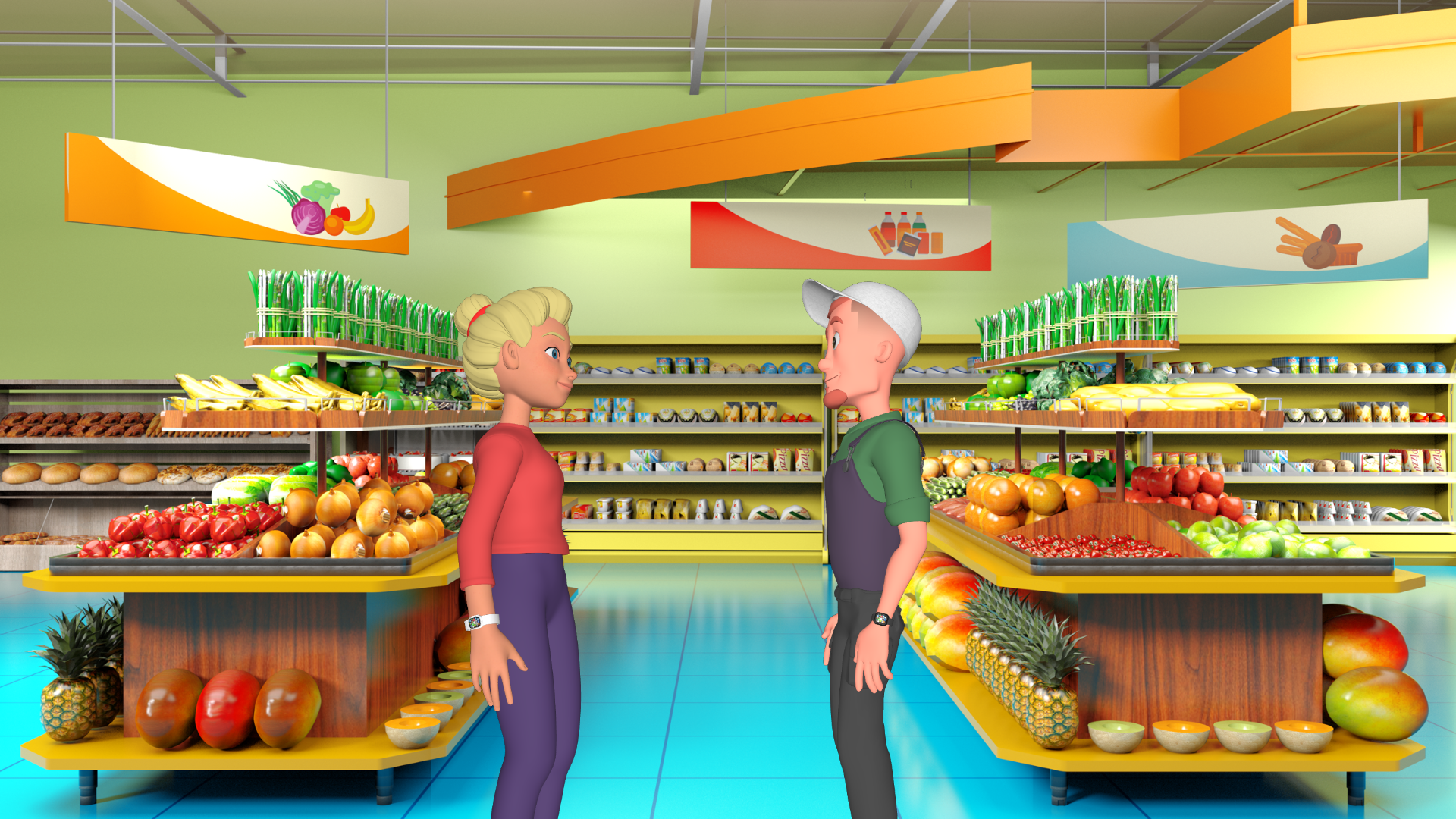
Don't forget to like the video and subscribe to the channel.
Watch the video again while reading the text. Check whether you understand more and pay attention to how the words are pronounced.
A: Pardon, kunt u mij helpen?
B: Ja hoor, zegt u het maar.
A: Waar staan de eieren?
B: Die vindt u in gang drie, naast de melk.
A: Dank u wel!
B: Graag gedaan!
A: Hallo, klopt het dat de appels in de aanbieding zijn?
B: Ja, vandaag twee zakken voor de prijs van één.
A: Mooi! En geldt dat ook voor de peren?
B: Nee, alleen voor de appels.
A: Oké, dan neem ik twee zakken appels.
B: Alstublieft.
A: Goedemiddag.
B: Goedemiddag. Wilt u een tasje?
A: Nee, dank u.
B: Dat is dan €12,80 alstublieft.
A: Kan ik pinnen?
B: Jazeker. Dat is in orde. Wilt u het bonnetje?
A: Nee. Nog een prettige dag.
B: Dank u wel, u ook!
Read the English translation. Make sure you understand the Dutch conversation.
A: Excuse me, could you help me?
B: Sure, of course. What is it?
A: Where are the eggs?
B: You’ll find them in aisle three, next to the milk.
A: Thank you!
B: You’re welcome!
A: Hi, is it true that the apples are on sale?
B: Yes, today: two bags for the price of one.
A: Great! And does that also apply to pears?
B: No, only to apples.
A: Okay, then I’ll take two bags of apples.
B: Here you are.
A: Good afternoon.
B: Good afternoon. Would you like a bag?
A: No, thank you.
B: That’s €12.80, please.
A: Can I pay by card?
B: Yes, of course. That’s fine. Would you like the receipt?
A: No. Have a nice day.
B: Thank you, you too!
Listen to the conversation and repeat each sentence.
Dutch | English |
het ei (eieren) | egg / eggs |
de gang (-en) | aisle (in a shop) |
de appel (-s) | apple |
de aanbieding (-en) | special offer / sale |
de zak (-ken) | bag |
de prijs (prijzen) | price |
de peer (-en) | pear |
het tasje (-s) | (shopping) bag |
de kassa (-s) | checkout / cash desk |
boodschappen doen | to do the shopping / buy groceries |
contant geld | cash |
de pinpas (-en) | bank card / debit card |
Dit / Dat / Deze / Die (demonstratives)
In Dutch, demonstratives show:
Near: “this / these”
Word | Use it with | Example |
dit | het-words (singular) | Dit boek is nieuw. – This book is new. |
deze | de-words (singular) + all plurals | Deze man is aardig. – This man is nice. / Deze boeken… – These books… |
Far: “that / those”
Word | Use it with | Example |
dat | het-words (singular) | Dat huis is groot. – That house is big. |
die | de-words (singular) + all plurals | Die vrouw is mijn docent. – That woman is my teacher. / Die auto’s… – Those cars… |
Choose the correct demonstrative (dit / deze).
Choose the correct demonstrative (dat / die).
Dutch | English |
de bakker (-s) | bakery |
de slager (-s) | butcher’s |
de groentewinkel (-s) | greengrocer / vegetable shop |
de viswinkel (-s) | fish shop |
de kaaswinkel (-s) | cheese shop |
de drogist (-en) | drugstore (non-prescription) |
de apotheek (-en) | pharmacy |
de kledingwinkel (-s) | clothes shop |
de schoenenwinkel (-s) | shoe shop |
de speelgoedwinkel (-s) | toy shop |
de boekenwinkel (-s) | bookshop |
de elektronicawinkel (-s) | electronics shop |
de bloemenwinkel (-s) | flower shop |
het warenhuis (warenhuizen) | department store |
de kringloopwinkel (-s) | thrift shop / charity shop |
de meubelwinkel (-s) | furniture shop |
de bouwmarkt (-en) | DIY store / hardware store |
de dierenwinkel (-s) | pet shop |
de juwelier (-s) | jeweller’s |
Task: For each type of shop, write one Dutch word for something you can buy there.
Doing exercises is an essential part of the learning process. Don't worry about how many mistakes you make—mistakes are a normal and valuable part of learning.
When checking your answers, focus on understanding why an answer is correct. This will help you learn more effectively and avoid making the same mistakes in the future.