
1. Gesprek - Conversation

Watch the video of a customer paying at the checkout without reading the text first. Try to understand what is happening and what the people are saying.
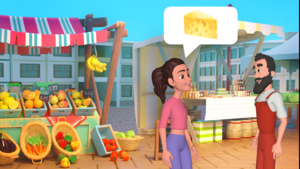

The video can be found here (YouTube).

Don't forget to like the video and subscribe to the channel.

Watch the video again while reading the text. Check whether you understand more and pay attention to how the words are pronounced.


A: Hallo. Wat kost dit brood?
B: Dat kost twee euro vijftig.
A: Oké. En deze kaas?
B: Die is vijf euro per stuk.
A: Dan neem ik het brood en de kaas.
B: Prima. Dat is samen zeven euro vijftig.
A: Hier is acht euro. 
B: Dank u. En hier is vijftig cent terug.
A: Bedankt. Fijne dag nog!
B: U ook een fijne dag!

Read the English translation. Make sure you understand the Dutch conversation.


A: Hi. How much is this bread?
B: That’s two euros fifty.
A: OK. And this cheese?
B: That one is five euros each.
A: Then I’ll take the bread and the cheese.
B: Great. That’s seven euros fifty altogether.
A: Here’s eight euros.
B: Thank you. And here’s fifty cents change.
A: Thanks. Have a nice day!
B: You have a nice day too!

Listen to the conversation and repeat each sentence.

2. Woordenschat - Vocabulary

Dutch

English

Wat kost …?

How much is …? / How much does … cost?

per stuk

each

terug

back / change (money you get back)

Fijne dag!

Have a nice day!

de markt (-en)

market

3. Grammatica - Grammar

Niet or geen? (Negation in Dutch)

Dutch has two common ways to say “not”:


1) GEEN = “no / not any”

Use geen when you negate an indefinite noun (a thing you don’t have / don’t want / don’t do).

Structure: geen + noun

Examples:

  • Ik heb geen boek. – I don’t have a book. / I have no book.
  • Zij drinkt geen koffie. – She doesn’t drink coffee.
  • Wij hebben geen kinderen. – We don’t have children.

2) NIET = “not”

Use niet to negate:

  • verbs (when you are not negating a noun),
  • adjectives, adverbs, or prepositional phrases,
  • or the whole sentence.


Structure:niet … (before the part you negate)

Examples:

  • Ik werk niet. – I don’t work.
  • Hij is niet thuis. – He’s not at home.
  • Zij is niet boos. – She’s not angry.
  • Wij gaan niet naar school. – We’re not going to school.

Choose the correct word: niet or geen.

  1. Ik heb                     fiets.
  2. Zij is                        moe.
  3. Wij drinken                          melk.
  4. Hij werkt                               op zaterdag.
  5. We hebben                          les vandaag.
  6. Dit is                       goedkoop.
  7. De kinderen slapen                          
  8. Ik koop                   brood.
  9. Hij is                       mijn broer.
  10. Zij hebben                            huisdier.

4. Nederlands Plus - Dutch plus

How do you say prices?

In Dutch, you usually say: [number] euro [number].
If it’s under 1 euro, you use cent.

In everyday speech, people sometimes leave out euro or cent if it’s clear from the context.

Examples:

  • Het kost twee euro. – It costs two euros.
  • Het kost twee euro vijftig. – It costs two euros fifty.
  • Het kost vijf euro tien. – It costs five euros ten.
  • Het is tien euro twintig. – It’s ten euros twenty.
  • Het kost negenennegentig cent. – It costs 99 cents.
  • Het kost één euro. – It costs one euro.

When you are in a shop, try saying the prices you see in Dutch. It’s also a good way to check whether you know the numbers well enough.


Useful words for prices

Dutch

English

Wat kost het?

How much is it?

Het kost … euro.

It costs … euros.

de korting (-en)

discount

gratis

free

betalen

to pay

pinnen

to pay by card

contant betalen

to pay in cash

  1. How much is that cheese?
  2. This apple is cheap.
  3. Can I pay in cash?
  4. This is free!
  5. Is there any special offer today?

5. Spreken - Speaking

    • Ga je vaak boodschappen doen?
    • In welke winkel koop je meestal brood?
    • Wat koop je vaak in de supermarkt?
    • Betaal je meestal contant of met pin?
    • Kijk je altijd naar aanbiedingen?
    • Wat vind je duur? En wat vind je goedkoop?
    • Koop je soms op de markt?
    • Ga je liever alleen of met iemand samen winkelen?
  • melk
  • brood
  • kaas
  • appels
  • eieren
  • bananen
  • water
  • bier

6. Extra oefeningen - Extra practice

  1. Ik koop vandaag                                 appels.
  2. Zij is                        boos.
  3. Wij hebben                          auto.
  4. Hij woont                              in Amsterdam.
  5. Mijn broer is                        thuis.
  6. Ik heb                     geld bij me.
  7. De kinderen slapen                          .
  8. Wij drinken                          koffie.
  1. Hoeveel kost dit brood? Het kost drie ___. (euros)
  2. Dit water is ___. (free)
  3. Kan ik ___? (pay by card)
  4. Is er vandaag een speciale ___? (discount)
  5. U krijgt één euro ___. (back / change)
  1. Wat kost dit brood?                                        a. Nee, bedankt.
  2. Kan ik pinnen?                                                   b. Dat kost twee euro vijftig.
  3. Wilt u een tasje?                                              c. U ook een fijne dag.
  4. Hier is tien euro.                                               d. Jazeker, dat kan.
  5. Fijne dag nog!                                                    e. Dank u, en hier is twee euro terug.
  1. Is er korting?                                                      a. Vijf euro per stuk.
  2. Wilt u het bonnetje?                                       b. Ja, 10%
  3. Hoeveel kost de kaas?                                    c. Nee, dank u.
  4. Hier is acht euro.                                              d. Dank u wel.
  5. Dat is samen zeven euro vijftig.                  e. Prima, ik betaal.
  1. terug                     a. discount
  2. de markt              b. market
  3. gratis                     c. back
  4. de korting            d. free
  5. betalen                 e. to pay

Antwoorden - key

Doing exercises is an essential part of the learning process. Don't worry about how many mistakes you make—mistakes are a normal and valuable part of learning.

When checking your answers, focus on understanding why an answer is correct. This will help you learn more effectively and avoid making the same mistakes in the future.

  1. Ik heb geen fiets.
  2. Zij is niet moe.
  3. Wij drinken geen melk.
  4. Hij werkt niet op zaterdag.
  5. We hebben geen les vandaag.
  6. Dit is niet goedkoop.
  7. De kinderen slapen niet
  8. Ik koop geen brood.
  9. Hij is niet mijn broer.
  10. Zij hebben geen huisdier.
  1. Wat kost de kaas?
  2. Deze appel is goedkoop
  3. Kan ik contant betalen?
  4. Dit is gratis.
  5. Is er een aanbieding vandaag? / Is er vandaag een aanbieding?
  1. Ik koop vandaag geen appels.
  2. Zij is niet boos.
  3. Wij hebben geen auto.
  4. Hij woont niet in Amsterdam.
  5. Mijn broer is niet thuis.
  6. Ik heb geen geld bij me.
  7. De kinderen slapen niet.
  8. Wij drinken geen koffie.
  1. Hoeveel kost dit brood? Het kost drie Euro.
  2. Dit water is gratis.
  3. Kan ik pinnen?
  4. Is er vandaag een speciale aanbieding?
  5. U krijgt één euro terug.

1b, 2d, 3a, 4e, 5c

  1. 1b, 2c, 3a, 4d, 5e
  1. 1c, 2b, 3d, 4a, 5e