
Watch the video of two students talking during a break without reading the text. Try to understand what is happening and what they are saying.
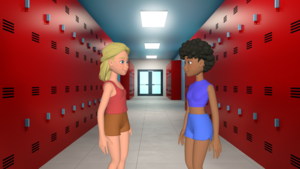
Don't forget to like the video and subscribe to the channel.
Watch the video again while reading the text. Check whether you understand more and pay attention to how the words are pronounced.
A: Hoe oud ben jij?
B: Ik ben 16 jaar. En jij?
A: Ik ben 18.
B: Oh, ouder dan ik!
A: Ja, een beetje. En hoe oud is je broer?
B: Mijn broer is 30. Hij is getrouwd en heeft een kind.
A: Echt? Wat leuk! En je zus?
B: Zij is 25. Ze studeert nog.
A: Dus jij bent de jongste?
B: Ja, ik ben de jongste van de drie.
A: In mijn familie ben ik de oudste. Mijn zus is 12.
B: Interessant. Kun je goed tellen in het Nederlands?
A: Ja, denk ik wel. Eén, twee, drie, vier, vijf, zes, …
B: Goed zo! Nummers zijn belangrijk.
A: Zeker! Vooral in de supermarkt!
Read the English translation. Make sure you understand the Dutch conversation.
A: How old are you?
B: I’m 16. And you?
A: I’m 18.
B: Oh, older than me!
A: Yes, a little. And how old is your brother?
B: My brother is 30. He’s married and has a child.
A: Really? That’s nice! And your sister?
B: She’s 25. She’s still studying.
A: So you’re the youngest?
B: Yes, I’m the youngest of the three.
A: In my family, I’m the oldest. My sister is 12.
B: Interesting. Can you count well in Dutch?
A: Yes, I think so. One, two, three, four, five, six, …
B: Well done! Numbers are important.
A: Definitely! Especially in the supermarket!
Listen to the conversation and repeat each sentence.
Dutch | English |
Hoe oud ben jij? | How old are you? |
het jaar (-en) | year |
ouder | older |
de broer (-s) | brother |
getrouwd | married |
het kind (-eren) | child |
de zus (-en) | sister |
studeren | to study (at college/university) |
jongste | youngest |
oudste | oldest |
de familie (-s) | family |
interessant | interesting |
tellen | to count |
het nummer (-s) | number |
belangrijk | important |
de supermarkt (-en) | supermarket |
de mens (mensen) | person / human |
Plural 1: nouns with -en
How do you form the plural in Dutch?
Many Dutch nouns form the plural with -en.
Examples:
Spelling rules (what to watch out for)
a) Double the consonant
If a word ends in a short vowel + consonant, the consonant is often doubled in the plural:
Singular | Plural |
kat | katten |
bed | bedden |
bus | bussen |
b) A long vowel may become shorter
Sometimes a long vowel changes when the spelling changes:
Singular | Plural |
raam | ramen |
baan | banen |
Make the plural with -en. Pay attention: sometimes you must double the consonant or the vowel spelling changes.
Numbers are very important when learning a language, because you use them everywhere. Listen and repeat.
1–20
Dutch | English |
één | one |
twee | two |
drie | three |
vier | four |
vijf | five |
zes | six |
zeven | seven |
acht | eight |
negen | nine |
tien | ten |
elf | eleven |
twaalf | twelve |
dertien | thirteen |
veertien | fourteen |
vijftien | fifteen |
zestien | sixteen |
zeventien | seventeen |
achttien | eighteen |
negentien | nineteen |
twintig | twenty |
Tens
Dutch | English |
twintig | twenty |
dertig | thirty |
veertig | forty |
vijftig | fifty |
zestig | sixty |
zeventig | seventy |
tachtig | eighty |
negentig | ninety |
honderd | one hundred |
How Dutch numbers are built
From 21 onwards, Dutch uses en (“and”):
Important: Dutch says the ones first, then the tens:
Two special marks: ë and é
You may notice ë and é in some numbers. These are not new letters. They show pronunciation:
Write the numbers in words
5 →
11 →
17 →
24 →
39 →
56 →
70 →
84 →
99 →
100 →
Match the numbers
lievelingsgetal = favourite number
Practise numbers every day. For example, count your steps while walking.
Challenge: count by fives, or count only even/odd numbers.
Doing exercises is an essential part of the learning process. Don't worry about how many mistakes you make—mistakes are a normal and valuable part of learning.
When checking your answers, focus on understanding why an answer is correct. This will help you learn more effectively and avoid making the same mistakes in the future.
1b, 2c, 3e, 4d, 5a